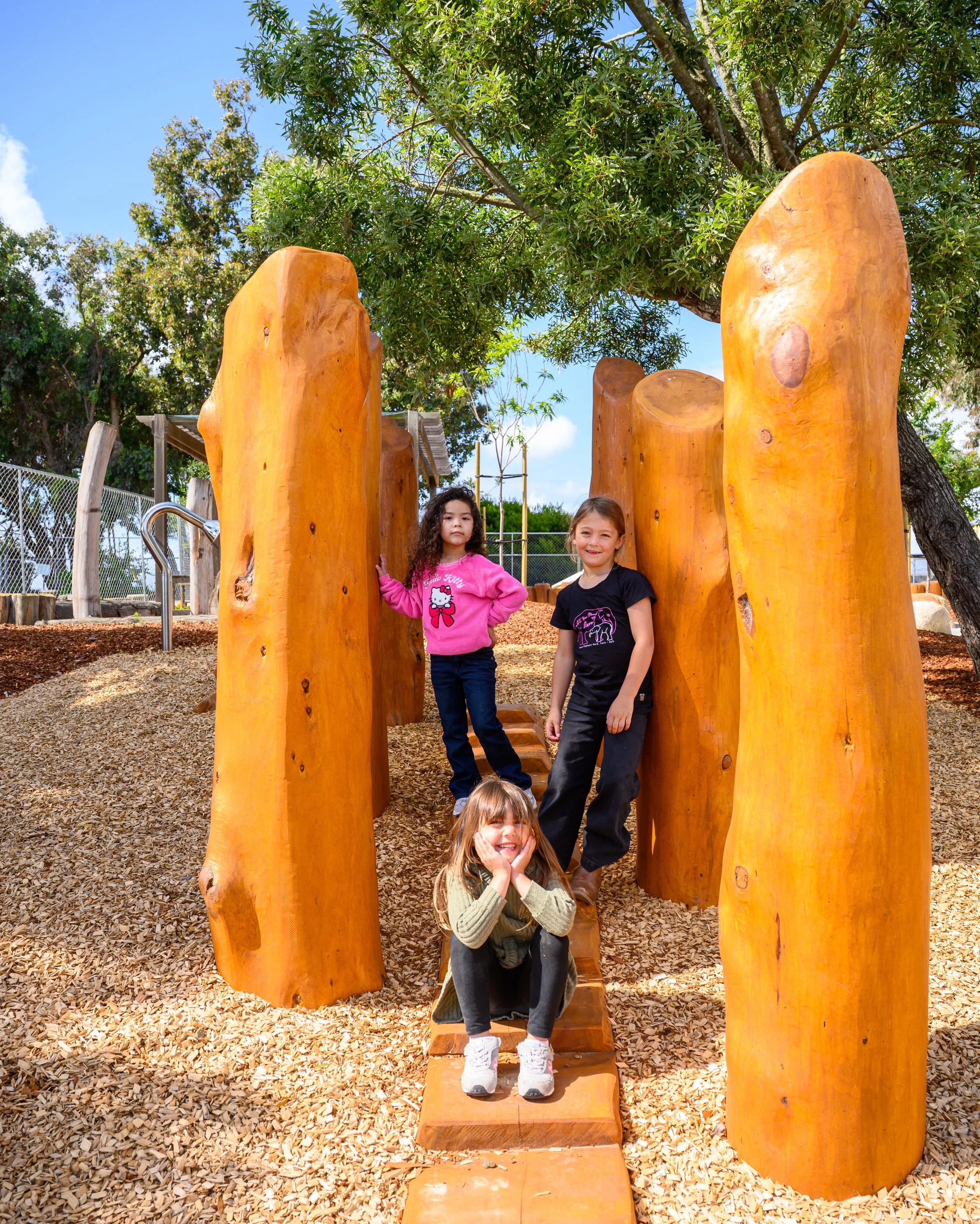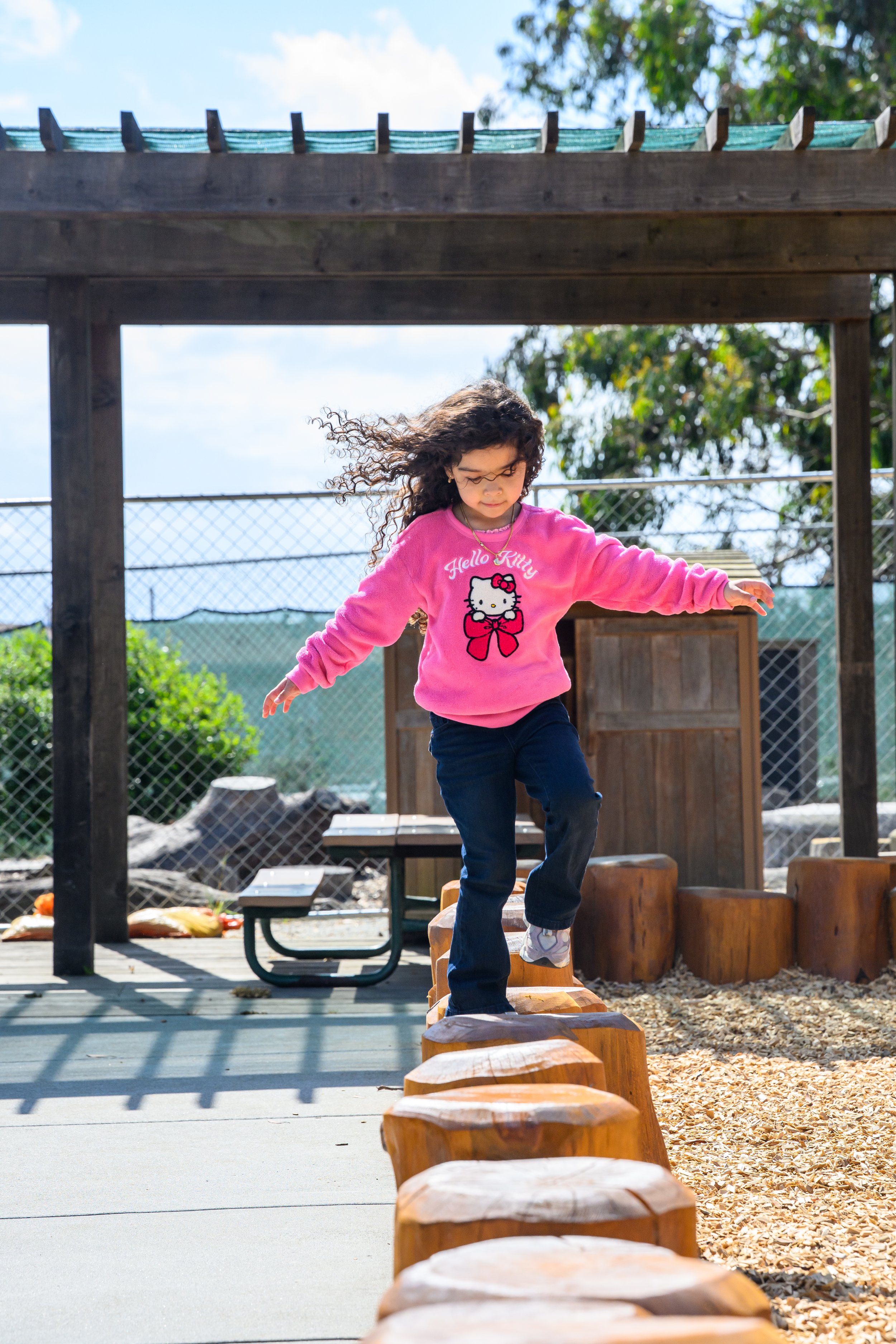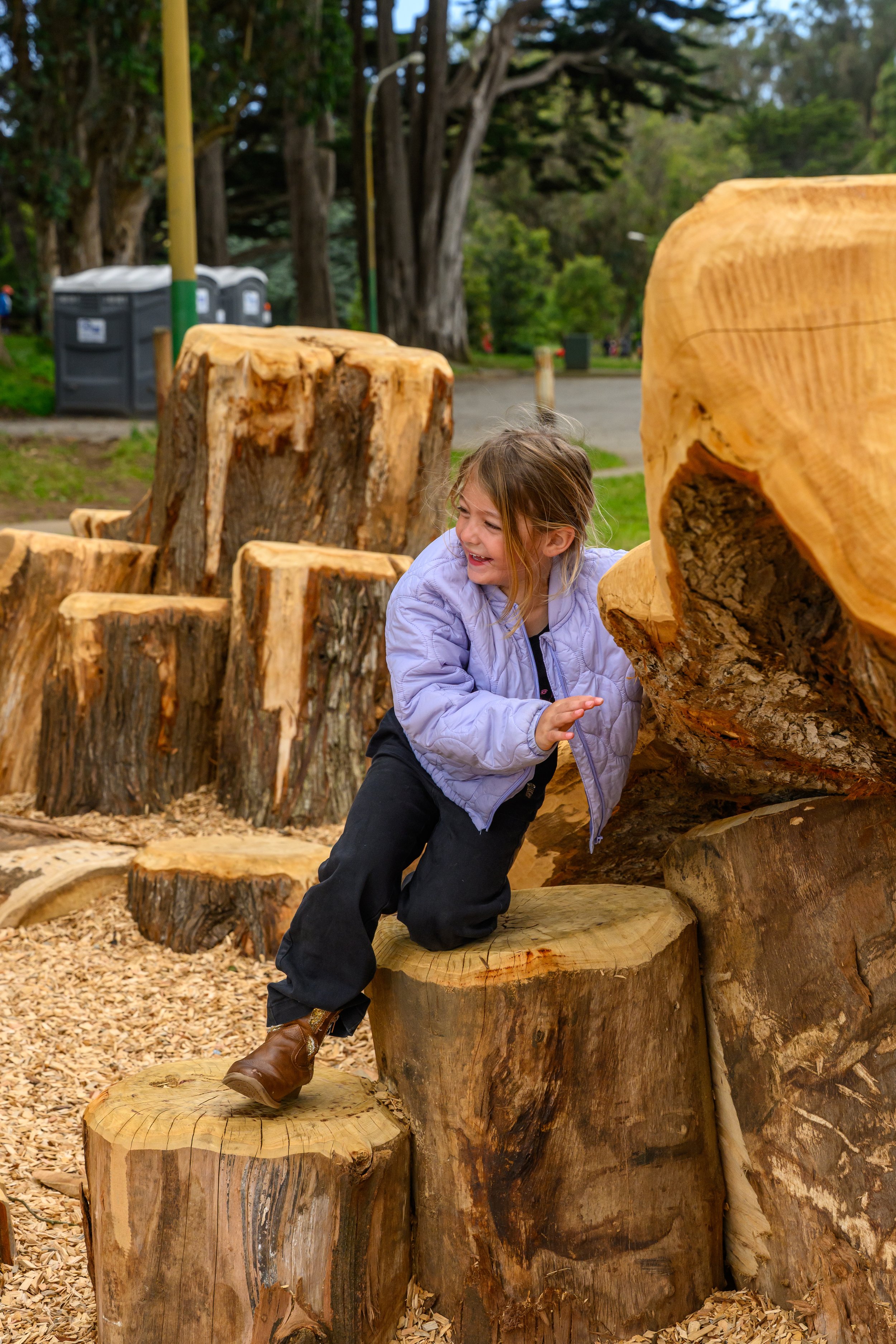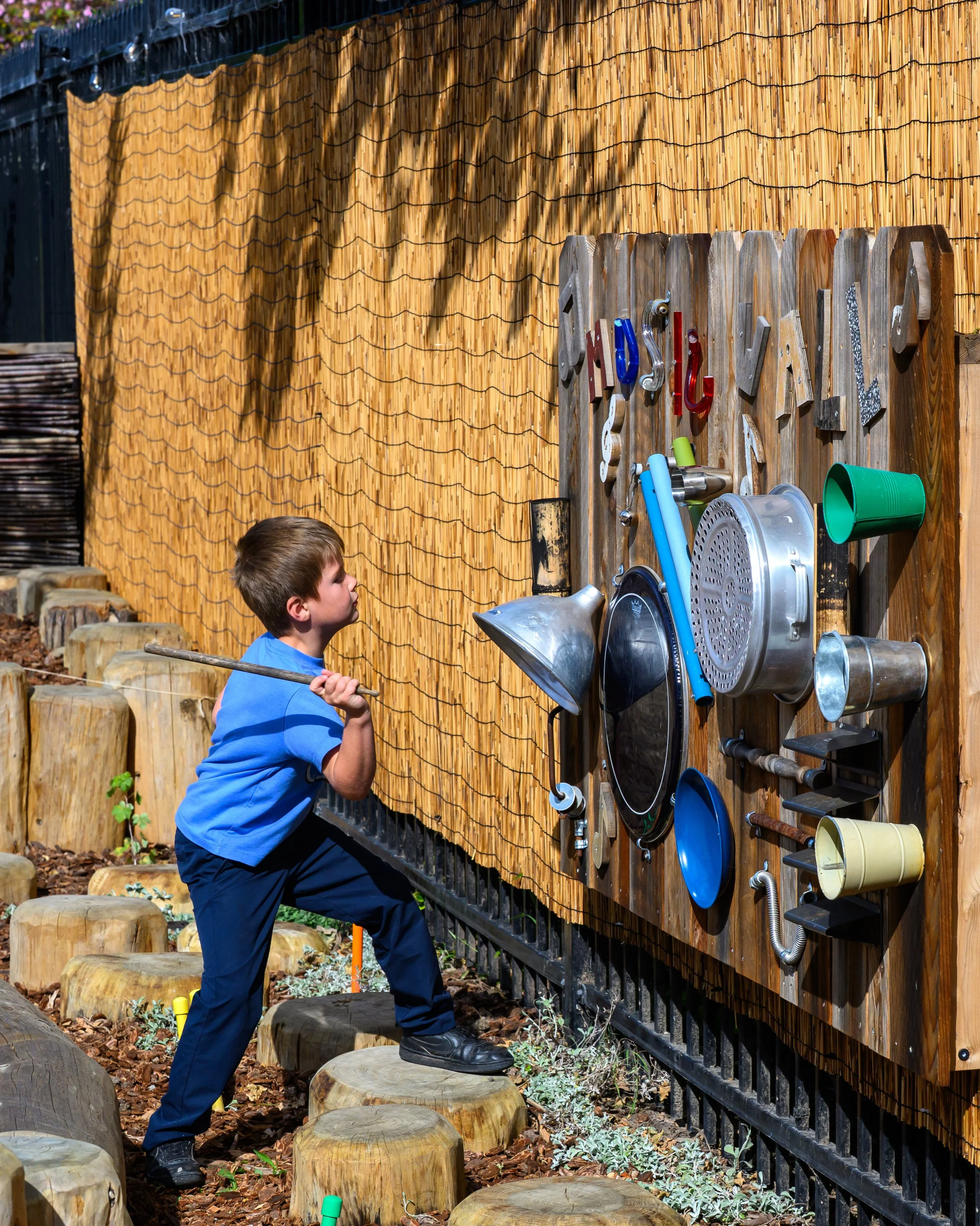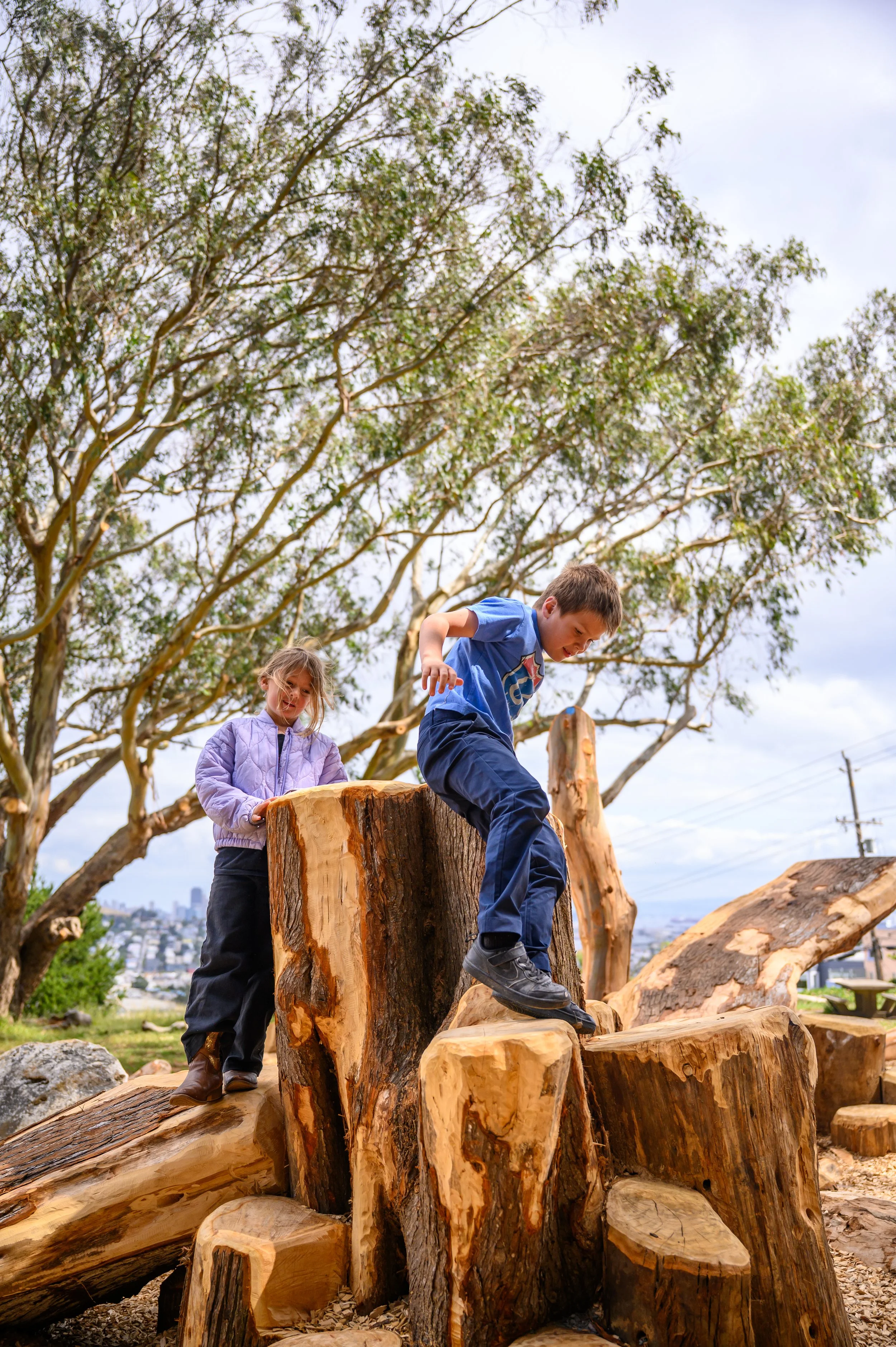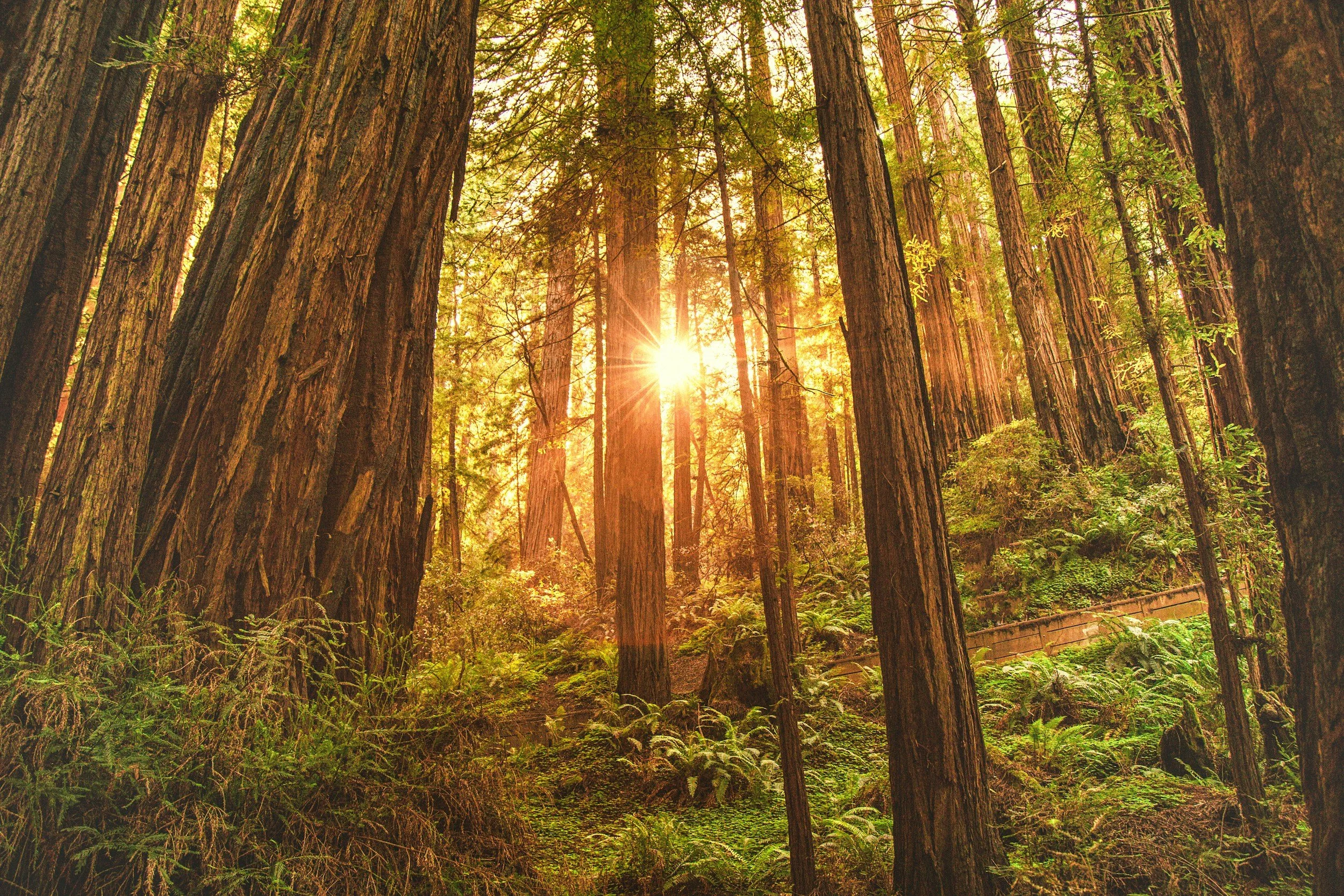
The Research is clear. The need is real.
Nature-based play environments are not a trend. They are a response to decades of research showing that children's physical, cognitive, and emotional development is directly supported by unstructured engagement with natural landscapes.
Benefits and Findings
❋ Motor & Physical Development Children playing in natural landscapes show improved motor fitness, balance, and coordination.
❋ Attention & ConcentrationExposure to green outdoor settings improves concentration and reduces attention fatigue in children.
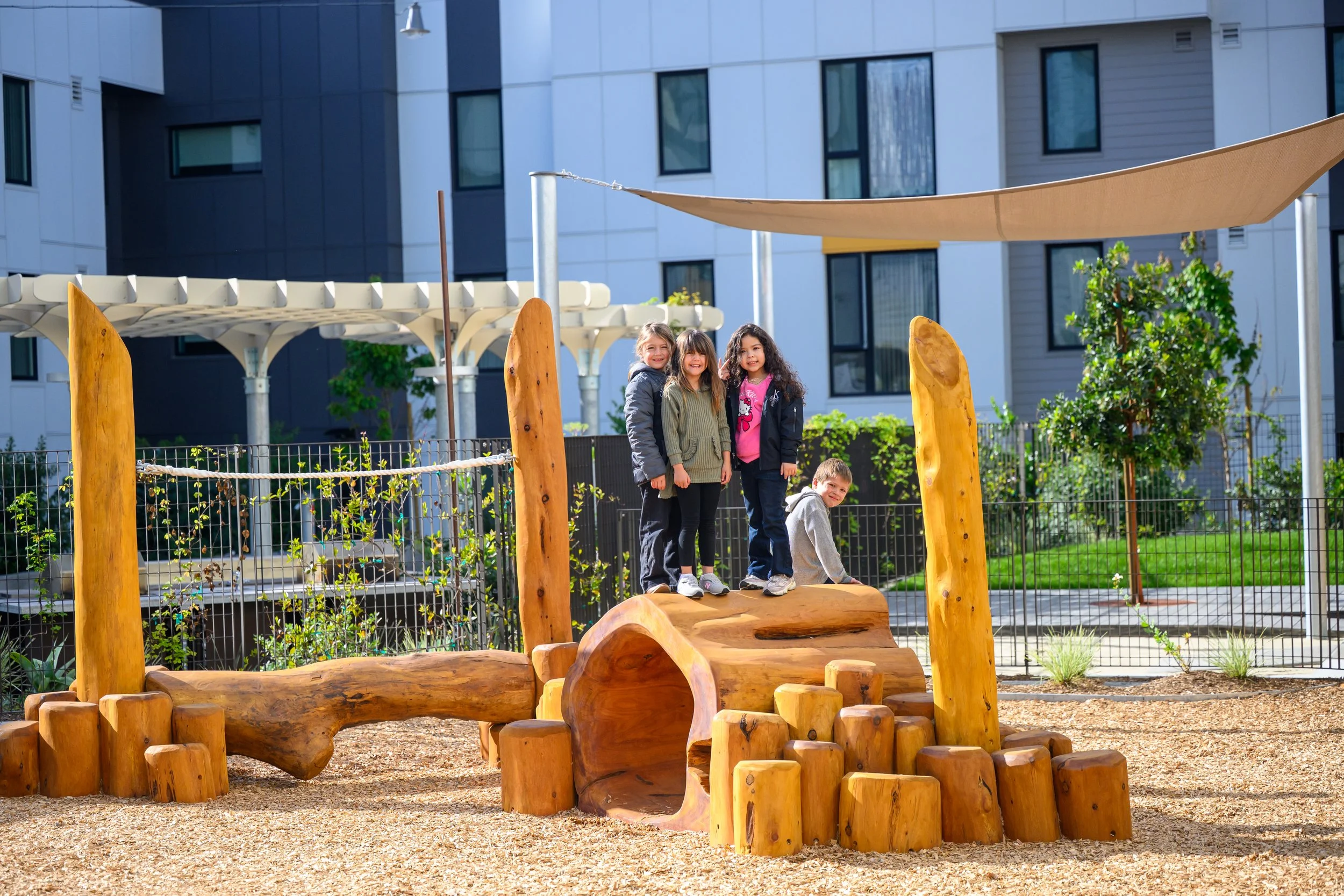
❋ Emotional RegulationAccess to green space is associated with reduced stress, improved emotional regulation, and increased imaginative play.
(Multiple peer-reviewed studies)
❋ Inclusive BenefitsNature play has documented benefits for children with ADHD, sensory processing differences, and autism spectrum conditions — improving focus, reducing anxiety, and supporting social engagement.
❋ Physical ActivityAccording to the CDC, only 24% of children ages 6–17 meet recommended daily physical activity levels. Nature-based environments increase active play duration and engagement.
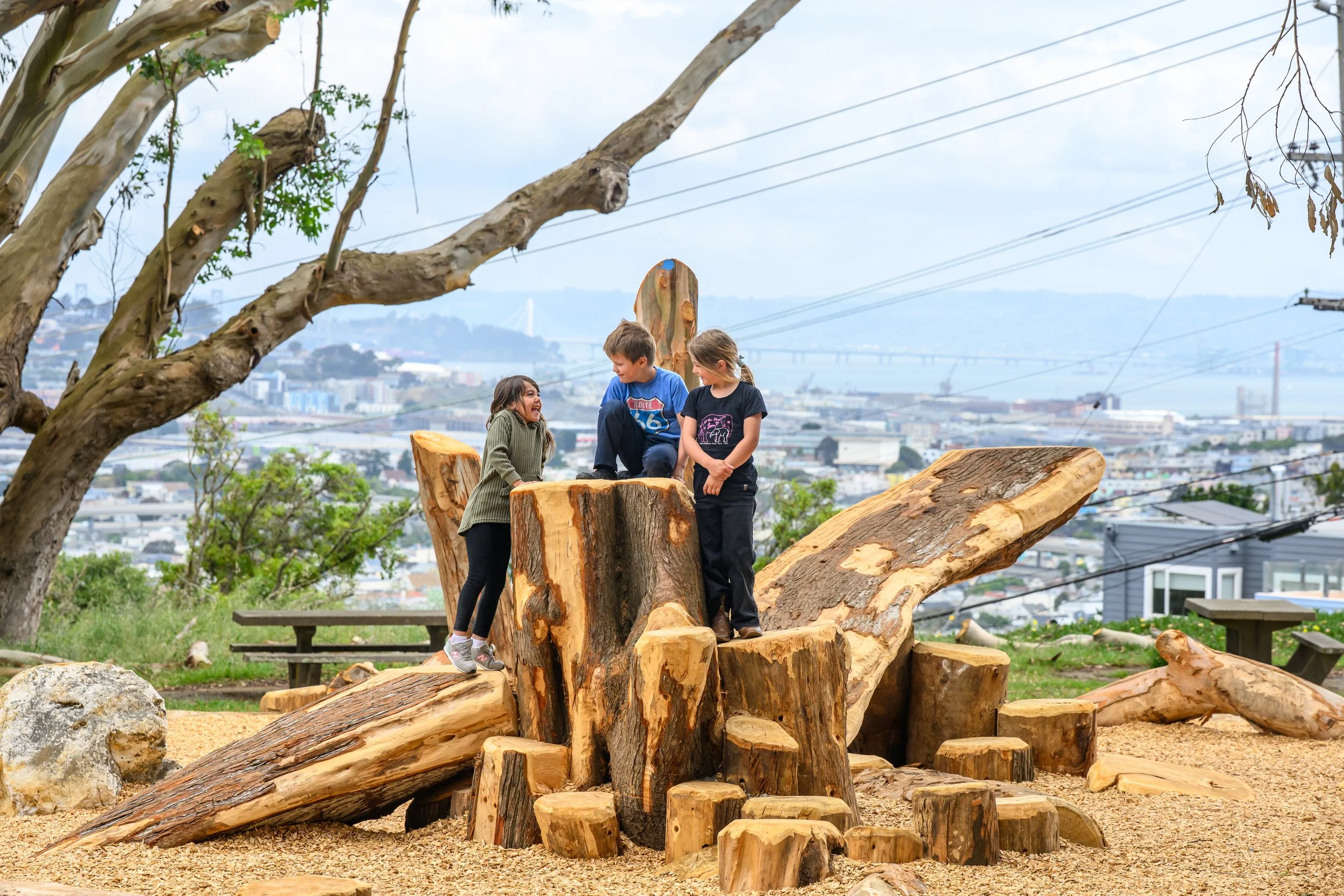
The Next Generation of Environmental Stewards
Children who play in natural environments grow up to care about them. Access to natural landscapes in childhood is one of the strongest predictors of environmental stewardship in adulthood.
Every nature play space we build is an investment not just in the children who use it today — but in the adults who will make decisions about the natural world tomorrow.